
For SMB IT teams, choosing a VoIP solution isn’t just about cost savings. It’s about control, flexibility, and avoiding long-term dependency on vendors.
Vendor lock-in VoIP is a real concern because it doesn’t always show up in obvious ways. Vendor lock-in means being tied to a vendor’s system, proprietary technologies, or contractual constraints that make it difficult to switch vendors without higher costs, disruption, or risk to service continuity.
In practice, vendor lock-in occurs when businesses rely too heavily on a single vendor, proprietary software, or specific vendor platforms that limit data portability and restrict how systems interact with other tools. It often happens slowly in the background, making it hard to spot.
This guide breaks down vendor lock-in risks, how it impacts your technology stack, and how SMB IT teams can avoid it using open standards VoIP, SIP compatibility, and flexible services.
What Vendor Lock-in Really Looks Like in VoIP
Vendor lock-in is often misunderstood. It’s not just about long-term contracts or multiyear commitments; it’s about control over your entire system.
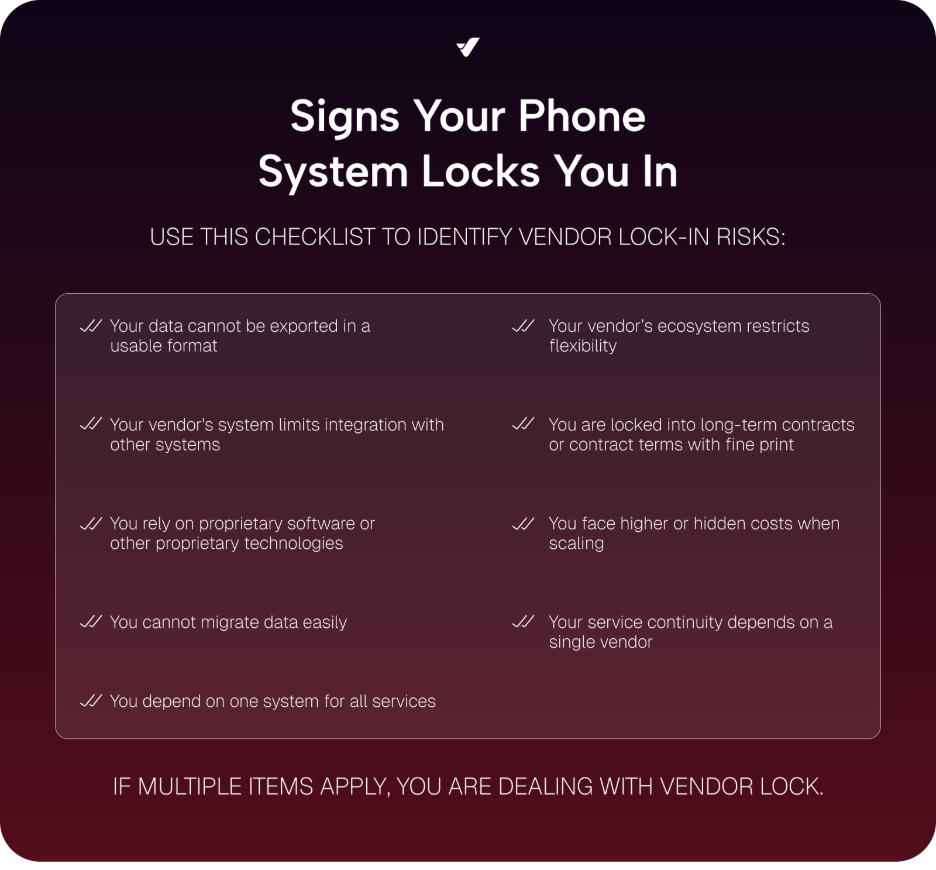
Vendor lock-in occurs when:
- You rely on proprietary software or proprietary technologies
- Your data is stored in formats that are not a usable format outside the vendor’s ecosystem
- Your routing system and call routing are locked into a vendor’s system
- Your phones or infrastructure only work with the same vendor
- You depend on support tickets for basic features or configuration changes
In VoIP, vendor lock can also come from cloud services and cloud vendors that limit interoperability with third-party systems or other tools.
This creates vendor dependency, where switching vendors becomes expensive, complex, and disruptive to business operations.
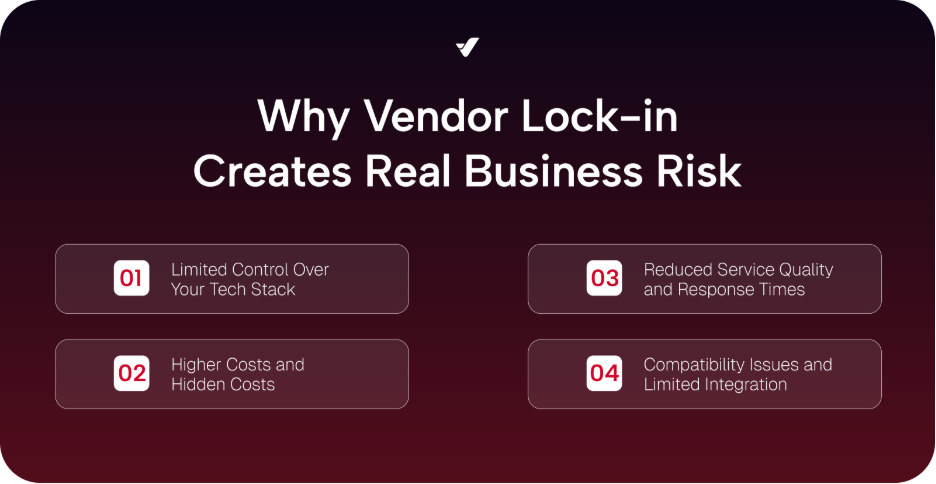
Why Vendor Lock-in Creates Real Business Risk
Vendor lock isn’t just a technical issue; it directly impacts business outcomes.
Limited Control Over Your Tech Stack
When vendors restrict API access, API documentation, or API flexibility, your team loses control over integrations, analytics tools, and automation.
That means slower innovation, limited extensive customization, and reduced ability to adapt to changing business needs.
Higher Costs and Hidden Costs
Vendor lock-in often leads to hidden costs such as:
- Additional fees for basic features or advanced features
- Custom pricing structures tied to call volume
- Costs to migrate data or reconfigure existing systems
Over time, these reduce cost effectiveness and make it harder to optimize costs.
Reduced Service Quality and Response Times
When you depend on one system or a single vendor, service quality can suffer.
Response times may increase, and your ability to maintain service continuity during outages is limited.
Compatibility Issues and Limited Integration
Vendor lock-in can create compatibility issues with third-party tools, contact centers, and other systems.
This makes it harder to connect your technology stack with open-source software or enterprise-grade platforms.
The Core Idea: Control, Portability, and Flexibility
To avoid vendor lock-in, IT teams need to focus on three things:
- Data portability
- Open standards and SIP trunking compatibility
- Control over configuration and services
Avoid vendor lock by ensuring your system isn’t tied to proprietary vendors or a closed vendor’s ecosystem.
1. SIP Compatibility and Open Standards VoIP
A SIP compatible provider built on open standards VoIP allows your systems to connect with other systems without restriction.
This ensures:
- Your existing systems and PBX can connect without changes
- Your data and call routing remain portable
- You can integrate with third-party systems and tools
- You avoid cloud vendor lock-in tied to proprietary technologies
Using open-source software and standard SIP trunking compatibility gives you flexibility across vendors and cloud computing environments.
This reduces vendor dependency and allows you to switch vendors without rebuilding your entire system.
2. BYOD VoIP Service and Hardware Independence
A BYOD VoIP service, or bring your own device VoIP service, helps avoid vendor lock by keeping your hardware independent from specific vendors.
With BYOD, you can:
- Use existing systems, phones, and infrastructure
- Avoid proprietary software restrictions
- Maintain compatibility across vendors
- Reduce switching costs and additional fees
This is especially important for contact centers and businesses with enterprise-grade deployments that require flexibility.
Avoid vendor lock by ensuring your devices are not tied to proprietary vendors or a single vendor platform.
3. Self-Service Control and API Access
Vendor lock-in often happens when vendors restrict control over configuration.
Look for platforms that provide:
- API access and strong API documentation
- Real-time control over routing systems and call routing
- Transparent pricing without fine print
- Flexible contracts instead of long-term commitments
When IT teams control their configuration, they can:
- Adjust services without relying on support tickets
- Integrate with analytics tools and other tools
- Maintain service continuity during changes
This reduces vendor lock and gives you full control over your tech stack.
How to Evaluate Vendors Without Getting Locked In
Step 1: Test Compatibility
Ensure compatibility with your technology stack, existing systems, and third-party systems.
Step 2: Run a Pilot
Use a pilot to test services, call quality, and service quality before committing.
Step 3: Validate Data Portability
Confirm you can migrate data and export data in standard data formats.
Step 4: Review Contracts and Pricing
Look for transparent pricing, flexible contracts, and avoid long-term contracts with restrictive fine print.
Step 5: Test Exit Strategy
Make sure you can switch vendors without rebuilding your entire system or incurring higher costs.
The Role of Cloud Services and Cloud Vendors
Cloud services and cloud vendors play a major role in vendor lock-in.
Cloud vendor lock-in happens when cloud computing platforms restrict portability or integration.
To avoid vendor lock-in, make sure your cloud services support open standards, data portability, and integration with other systems.
A Practical Approach for SMB IT Teams
Avoid vendor lock by taking a phased approach:
- Start with a small deployment
- Test services and integrations
- Expand based on performance and business requirements
This approach helps customers validate service quality, cost savings, and flexibility before committing to a new system.
Vendor Lock-in Is Not Just a Technical Limitation
It’s a business risk that affects cost effectiveness, flexibility, and long-term success.
To avoid vendor lock-in:
- Choose vendors who support open standards and open-source software
- Prioritize data portability and API flexibility
- Avoid proprietary technologies and proprietary vendors
- Look for flexible contracts and transparent pricing
When you avoid vendor lock, you maintain control over your systems, your data, and your future.
That’s how SMB IT teams reduce vendor lock-in risks and build a flexible, scalable VoIP environment.
Need help avoiding or getting out of vendor lock-in? VoIP.ms is here to help, just reach out.