Switching from traditional phone systems to a modern solution can feel like a high stakes move, especially for small businesses relying on a stable business phone system to manage daily operations.
Whether you’re using PRI, a legacy phone system, or evaluating a new VoIP phone system, choosing the right SIP trunk provider plays a direct role in how your business phone performs.
The good news is that you don’t have to rip and replace everything at once.
A growing number of organizations are testing SIP trunking alongside existing phone lines before committing. This approach reduces risk, improves visibility, and ensures your business communication stays uninterrupted.
In this guide, we’ll walk through what to look for in a SIP trunking provider, how to test safely, and how to compare options without disrupting your phone calls.
Why Your SIP Trunk Provider Impacts More Than You Think
Your SIP trunk provider affects far more than just connectivity. It influences call quality, customer support, call analytics, and the overall customer experience tools your team depends on.
For small businesses and MSPs, a poor choice can lead to:
- Dropped voice calls and inconsistent call handling
- Limited call routing and routing features
- Lack of call monitoring and call recording
- Poor customer support and phone support availability
- Increased costs with unclear pricing structure
The right SIP trunking provider, on the other hand, supports scalable business voice, reliable service, and measurable cost savings.
PRI vs. SIP Trunking: Why Businesses Are Moving Away from Legacy Systems
Traditional phone systems like PRI were built for a different era. They rely on fixed phone lines, rigid capacity, and limited flexibility.
Modern SIP trunking services operate over an internet connection using internet protocol, enabling:
- Flexible call volume scaling
- Support for both unlimited domestic calling and unlimited international calling alike
- Integration with unified communications tools
- Better support for global and international calling
This shift is why many businesses are replacing legacy systems with business VoIP systems designed for modern workflows.
What Modern Business Communication Looks Like Today
Today’s business VoIP system goes beyond simple voice calls. “VoIP makes it easy to accommodate calls anywhere, allowing companies to increase productivity by up to 20 percent.”
It includes:
- Video meetings and video conferencing with screen sharing
- Team messaging and business texting
- Mobile app access for mobile phones and remote teams
- Integration with tools like Google Workspace
Solutions like Zoom Phone have accelerated expectations, but not every SIP provider delivers the same level of flexibility.
When evaluating a VoIP provider, the goal is to find one that supports your full communication stack, not just outbound calls.
The Smarter Approach: Test SIP Trunking Before You Migrate
Instead of committing to a full migration, businesses are now testing SIP trunking in parallel.
This allows you to:
- Receive phone calls through a new SIP trunk provider while maintaining your existing system
- Test VoIP calls and phone calls across multiple routes
- Evaluate call forwarding, call queues, and call handling features
- Validate automatic call recording and voicemail transcription
This phased setup process helps you confirm performance before porting a phone number or switching business phone numbers.
What to Look for in a SIP Trunk Provider
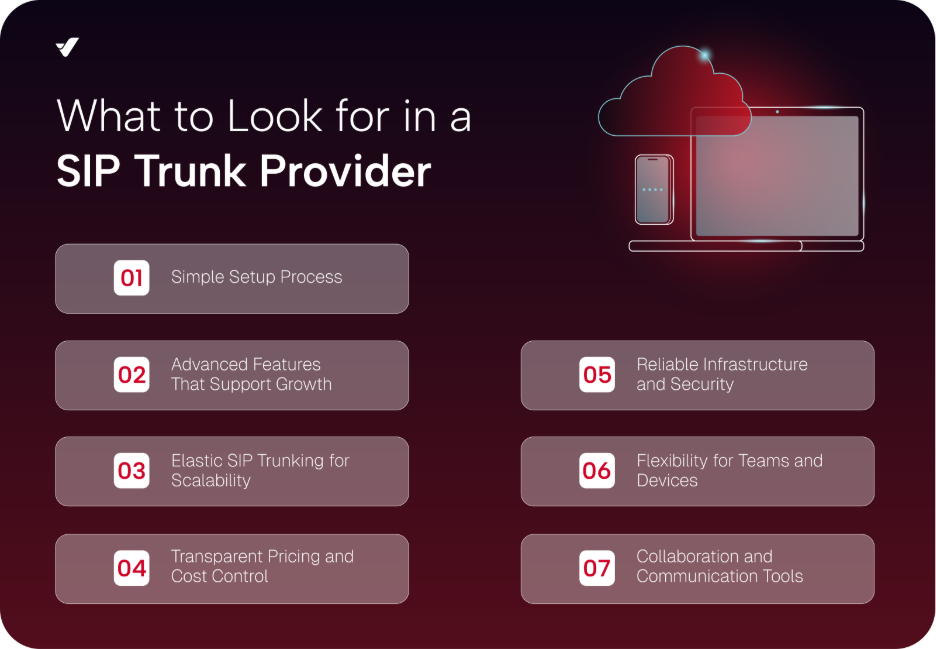
Not all SIP trunking providers support a flexible rollout. Here’s what matters most.
1. Simple Setup Process
A reliable SIP trunking provider should make onboarding easy.
Look for:
- Fast setup process with minimal friction
- Ability to connect desk phones and a VoIP phone quickly
- Support for virtual phone numbers and toll free numbers
This makes it easier to test without impacting your primary business phone.
2. Advanced Features That Support Growth
A modern VoIP phone service should include advanced features such as:
- Automatic call recording
- Call monitoring and analytics
- Caller ID and call forwarding
- Call queues and routing
These VoIP features help your sales team and customer support teams manage interactions more effectively.
3. Elastic SIP Trunking for Scalability
Elastic SIP trunking ensures your phone system scales with demand.
This is critical for small business VoIP environments where call volume can fluctuate. You avoid overpaying while still supporting peak traffic.
4. Transparent Pricing and Cost Control
A strong SIP trunking provider should offer a clear pricing structure.
Look for:
- Pay-as-you-go rates
- Clear toll-free minutes pricing
- Visibility into international calling capabilities
This makes VoIP provider comparison easier and helps maintain predictable cost savings.
5. Reliable Infrastructure and Security
Your VoIP service should include:
- End-to-end encryption for secure voice calls
- Redundant infrastructure for reliable service
- Support for global calling
Security and uptime are nonnegotiable when handling business communication.
6. Flexibility for Teams and Devices
A modern phone system should support:
- Desk phones and mobile app usage
- Mobile phones and even a backup cell phone setup
- Phone extensions across teams
This ensures your team can communicate from anywhere.
7. Collaboration and Communication Tools
Beyond calling, look for team collaboration features such as:
- Video conferencing and video meetings
- Team messaging and unified communications
- Integration with customer experience tools
These capabilities improve internal communication and customer interactions.
How to Test a SIP Trunk Provider Step by Step
Step 1: Set Up Parallel SIP Trunking
Deploy a secondary SIP trunk provider alongside your existing VoIP system or PRI.
Step 2: Route a Portion of Calls
Send a portion of outbound and inbound phone calls through the new provider.
Track:
- Call quality and handling
- Call analytics and performance metrics
Step 3: Test Features and Reliability
Evaluate:
- Call recording and voicemail transcription
- Call monitoring and queues
- Failover routing features
Step 4: Validate Support
Engage customer support teams to assess responsiveness.
Step 5: Gradually Migrate Numbers
Once satisfied, begin number porting and transition business phone numbers and toll-free numbers.
The FCC confirms that businesses can retain their phone number when switching providers, which helps reduce migration risk.
Where VoIP.ms Fits In
Providers like VoIP.ms offer flexible SIP trunking services designed for gradual migration.
With solutions like virtual PRI, businesses can:
- Replace traditional phone systems without disruption
- Test SIP trunking before committing fully
- Manage toll free and international calling
- Customize call routing, call handling, and management features
This makes it a strong option for small businesses, MSPs, and teams looking for business VoIP solutions that prioritize control and flexibility.
Reduce Risk and Take Control of Your Phone System
Choosing the right SIP trunking provider isn’t about rushing into a decision, it’s about validating performance first.
By testing SIP trunking before migrating, you can:
- Reduce risk and avoid downtime
- Improve customer support and sales team performance
- Ensure your VoIP phone system delivers the features your business needs
If you’re exploring business VoIP or looking for the best VoIP for small business environments, taking a phased approach gives you confidence in your decision.
Gartner says 90 percent of businesses will adopt a hybrid cloud solution by 2027.
Ready to test before you commit?