
Small phone system frustrations have a way of creating bigger support problems over time.
Not because the issues themselves are complicated, but because they happen repeatedly.
A voicemail greeting that confuses callers. A call flow that routes people incorrectly after hours. A forwarding rule nobody updated months ago. Individually, these issues may seem minor. Together, they can create a steady stream of unnecessary tickets, interruptions, and manual admin work.
The good news is that many of these problems can be reduced with a few small adjustments.
For SMB IT teams, the goal usually isn’t rebuilding the phone system from scratch. It’s making practical improvements that simplify everyday call handling and reduce repetitive support requests.
Why Small Voice Issues Create So Many Tickets
Voice-related tickets are often repetitive because users encounter the same friction points every day.
Common complaints usually sound familiar:
- “Calls are going to the wrong place.”
- “Voicemail picked up too quickly.”
- “The after-hours greeting is outdated.”
- “I missed a call because forwarding wasn’t working.”
- “Customers don’t know which option to choose.”
Most of these aren’t major outages. They’re small workflow problems that gradually create support noise over time.
That’s why small operational tweaks can have such a large impact.
Small Tweaks That Commonly Reduce Support Noise
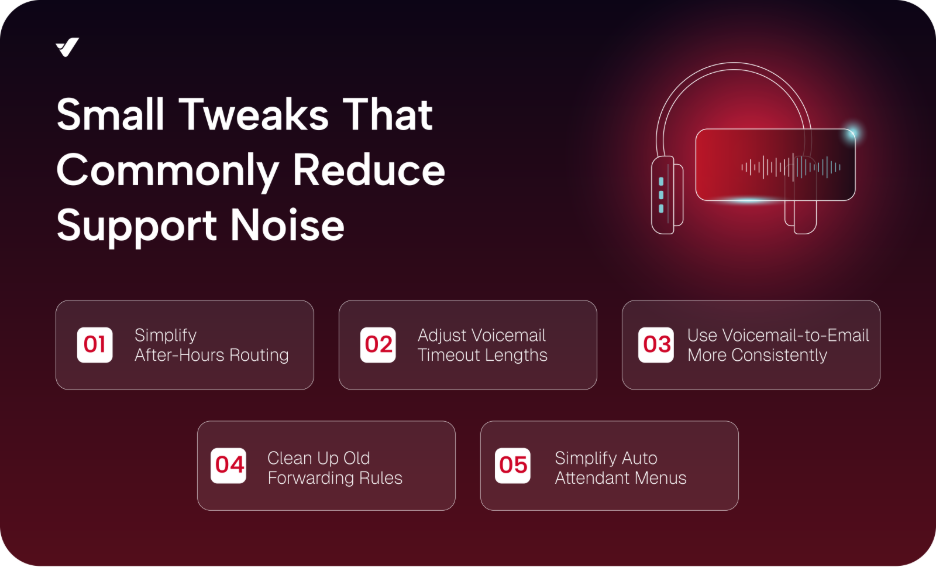
Simplify After-Hours Routing
After-hours call handling is one of the biggest sources of confusion for both callers and employees.
Many businesses still rely on outdated greetings, inconsistent forwarding, or manual schedule updates that don’t always get changed on time.
A cleaner after-hours setup can:
- route urgent calls correctly
- reduce missed calls
- eliminate confusion around business hours
- improve caller expectations
Even something as simple as updating greetings seasonally or standardizing after-hours routing rules can reduce recurring complaints significantly.
Adjust Voicemail Timeout Lengths
Voicemail timing issues create more frustration than many teams realize.
If voicemail activates too quickly, users feel like calls are being cut off prematurely. If it activates too slowly, callers may hang up before leaving messages.
Finding the right balance helps improve the caller experience while reducing:
- missed messages
- repeated callbacks
- internal complaints
- unnecessary troubleshooting requests
This is one of the easiest system tweaks to make and one of the most noticeable for users.
Use Voicemail-to-Email More Consistently
Voicemail messages often get missed simply because users forget to check them.
Enabling voicemail-to-email delivery helps teams respond faster without requiring employees to constantly monitor multiple systems.
This can be especially helpful for:
- remote employees
- shared departments
- front desk staff
- mobile teams
The result is fewer “I never got the message” situations and less follow-up troubleshooting for IT teams.
Clean Up Old Forwarding Rules
Forwarding rules tend to stick around long after they’re needed.
Temporary routing changes made during vacations, remote work periods, or staffing changes often remain active unintentionally. Over time, this creates inconsistent call handling and confusion around where calls are actually being routed.
A quick review of forwarding rules can help eliminate:
- incorrect routing
- duplicate forwarding
- unnecessary failover paths
- outdated user destinations
For many teams, this cleanup alone reduces a surprising number of support tickets.
Simplify Auto Attendant Menus
Complicated call menus frustrate callers and employees alike.
When auto attendants include too many options, unclear wording, or outdated departments, callers often:
- press the wrong option
- abandon calls
- transfer repeatedly
- contact the wrong team
Simplifying menu structures can improve call flow immediately without major system changes.
In many cases, fewer options create a better experience than adding more complexity.
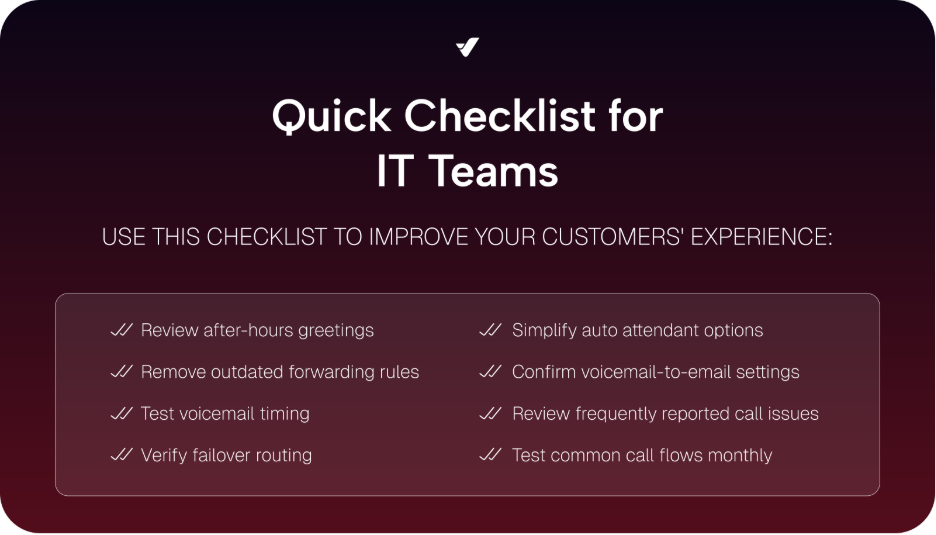
Why Small Improvements Matter Over Time
The biggest operational improvements don’t always come from large deployments or major infrastructure changes.
Often, they come from reducing small frustrations that users encounter repeatedly throughout the day.
When IT teams consistently improve:
- call routing
- voicemail handling
- forwarding behavior
- menu clarity
- failover reliability
…the overall support burden usually decreases along with it.
Less confusion leads to fewer tickets. Fewer tickets mean less reactive troubleshooting and more time spent on higher-value work.
Better Call Experiences Usually Start with Simpler Workflows
Most SMB IT teams don’t need more complexity. They need systems that are easier to manage, easier for users to navigate, and easier to troubleshoot when something changes.
That’s why small voice optimizations matter.
A few practical workflow improvements can help reduce support noise, improve consistency, and make everyday call management significantly easier over time.
Need help making some simple changes? Get in touch, we can help!